
I had colleagues in the orchestra I work with who went back home just because they couldn’t be sure if they had unplugged the iron. Some even brought their irons to rehearsal with them. The fact that they still experience hesitation despite having unplugged the iron shows us that the brain still doesn’t trust this information. Or perhaps, actually hearing that information has a much greater impact on the human brain than simply thinking about it.
- I believe that the effect of sounds arriving through the ear creates a more guaranteed perception than just thinking about the intention, meaning the brain is influenced more by sound than by thoughts.
- I have observed that this method provides much greater benefit in helping people with speech difficulties learn to speak.
- Repeating words along with periodic melodies creates a highly effective method. In this way, speech happens much more efficiently.
- I assume this was the scientific basis behind why asylums during the Ottoman Empire historically treated mentally ill patients using music.
My Students with Cochlear Implants, Down Syndrome and Autism
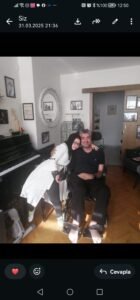
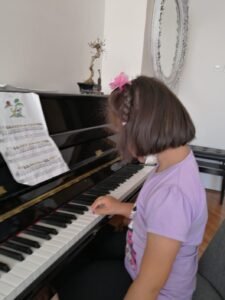
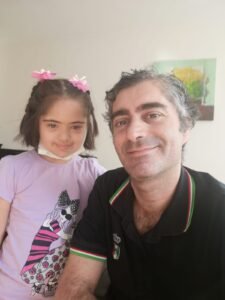
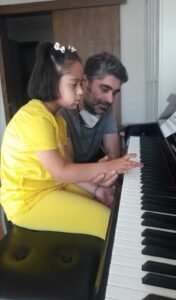
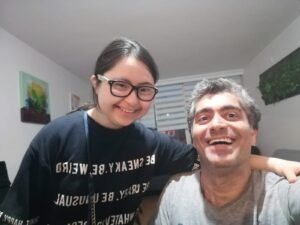
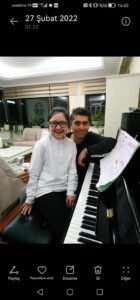
Little Nehir’s Adventure
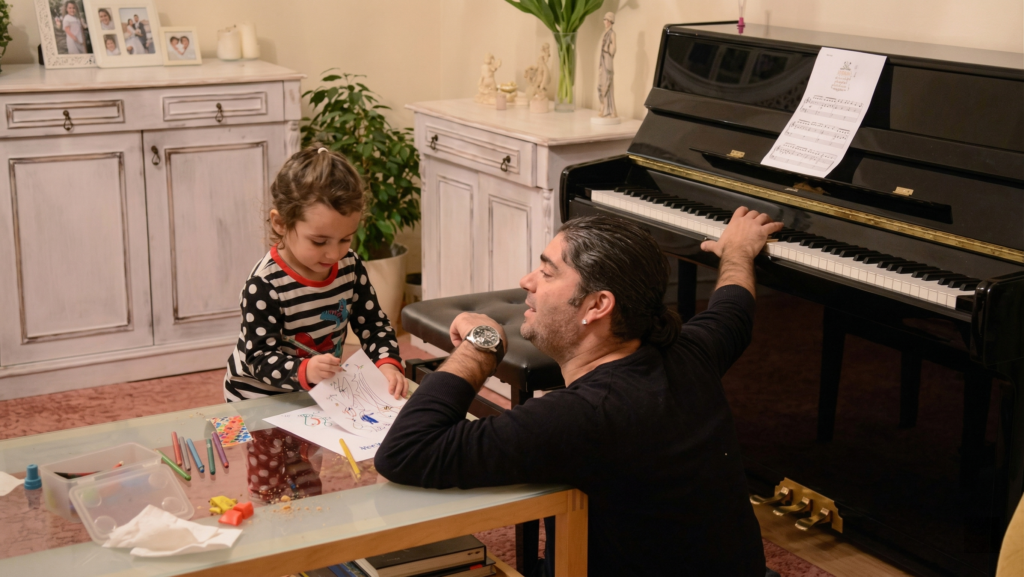
This adventure began with teaching piano to little Nehir. Born deaf in 2009, she is a child who began to hear following a cochlear implant surgery in 2011 and a brainstem operation in 2013. Nehir was four and a half years old, and I had the opportunity to give her lessons two days a week. Using the “Speaking with Music” therapy I developed myself, I noticed that she was able to vocalize words much more easily when done in a musical style.
Because of the success I achieved with this method, the professors from the Audiology Department at Hacettepe University’s Faculty of Health Sciences—who had been monitoring Nehir’s case—invited me to the university once they learned the reason behind her progress.
Since I had recorded all my work on video, I was able to give a presentation to the professors during my visit. When they asked, “What can we do for you?”, I replied: “If you open an elective course for me so I can reach children like Nehir, dozens of Serkan Özlüs can learn how to do this every semester.” The professors secured approval from the university senate and forwarded this request to the Ministry of Culture, to which I am affiliated.
The Ministry gave me approval to teach one day a week. As a result, I taught this course as a guest lecturer for ten years, receiving a monthly fee of 261 TL.
The Point Little Nehir Has Reached
My goal was to teach this therapy to young university students and be of help to dozens of children like Nehir.
Later, I began writing my book titled “Speaking with Music.” My aim was to introduce this therapy to the whole world. On certain days during my courses, I took my students to visit the rehearsals of the Ministry of Culture’s distinguished ensembles so they could observe exactly how sound is processed.
Sometimes, a few of my students would come up with all sorts of excuses not to attend. I would tell them, “Even if you had a million dollars, you could never get into the rehearsals of these ensembles; at best, you could watch their concerts from the front row.” My sole purpose was for them to see up close how music is crafted and processed.